

10 Female Artists You Should Have Known About Long Ago (But Possibly Don’t)

If you’re asked to name ten important artists, chances are you’ll start with Picasso, Van Gogh, Mondrian, or Dalí. Women? They are often noticeably absent from that list. Not because they weren’t there or didn’t produce great work, but because for a long time they were less visible due to the way art history has been constructed. Or because their work was only truly taken seriously decades later.
What’s interesting is that when you place these artists side by side, you don’t just see isolated exceptions, but patterns and similarities. They worked with abstraction before it was a movement, explored identity before it became a theme, and created their own visual languages in a time when that was far from self-evident.
To be honest: I didn’t know all of these artists equally well myself. That made putting this list together perhaps even more enjoyable. Either way, here are ten female artists you really should know.
1. Hilma af Klint: Pioneer of Abstract Art

Hilma af Klint is often mentioned in the same breath as Kandinsky, but historically she actually preceded him. She created abstract paintings before abstraction was officially recognized as an art movement. That must feel a bit like inventing the smartphone and then being forgotten for years. True, her work was also kept hidden for a long time at her own request, which meant her influence only became visible much later.
You can see her work at the Moderna Museet Stockholm (definitely worth a visit anyway) or Guggenheim Museum.
2. Paula Modersohn-Becker: Early Expressionist Voice

Paula Modersohn-Becker did not paint women as ideals, but as human beings: solid, direct, and unfiltered. Not necessarily flattering by today’s beauty standards, but perhaps precisely for that reason so refreshing to look at.
She is often seen as an early influence on expressionism, with work that looks strikingly modern for its time.
See her work at the Paula Modersohn-Becker Museum, Bremen
3. Leonora Carrington: Surrealism with a World of Its Own

Carrington is one of the most intriguing surrealists of the 20th century. While male surrealists often focused on dream imagery and shock value, she built an entire personal mythology. She worked within the same movement as Dalí and Breton, but developed a far more personal and inward visual language.
Don’t worry if you don't immediately understand her paintings. I don’t always either, and that is part of the charm.
Where to see her work:The Metropolitan Museum of Art collection
4. Remedios Varo: Surrealism as Science

Varo’s work feels like a cross between a dream and a laboratory. As if Einstein and Harry Potter ended up in the same studio.
Alchemy, science, and magic merge in her paintings like rain, soil, and sunlight coming together in a forest; separate forces, but inseparable once growth begins. Together with Carrington and Claude Cahun, she represents another side of Surrealism: less spectacle, more inner transformation.
5. Claude Cahun: Identity as an Art Form
Claude Cahun worked with photography and self-portraiture long

before identity became a central theme in art. She deliberately played with gender, appearance, and roles in images that still feel remarkably modern today.
Sometimes you look at a photograph and think: this could have been made yesterday. That says a lot about how far ahead of her time Cahun was.
Quick stop (or not so quick) at the Tate Britain collection to see this incredible work.
6. Sonia Delaunay: Art Without Boundaries

Why limit yourself when you can do anything? Sonia Delaunay was multidisciplinary long before that became a popular LinkedIn buzzword and my absolute favourite on this list. She worked across painting, fashion, and design simultaneously. For her, there was no strict separation between art and everyday life. Everything could become color, rhythm, and composition. In this sense she connects beautifully with Hilma af Klint: both abstract, but Delaunay is more playful and applied.
A good reason to visit Paris again and go to: Centre Pompidou collection
7. Lee Krasner: More Than “Pollock’s Wife”
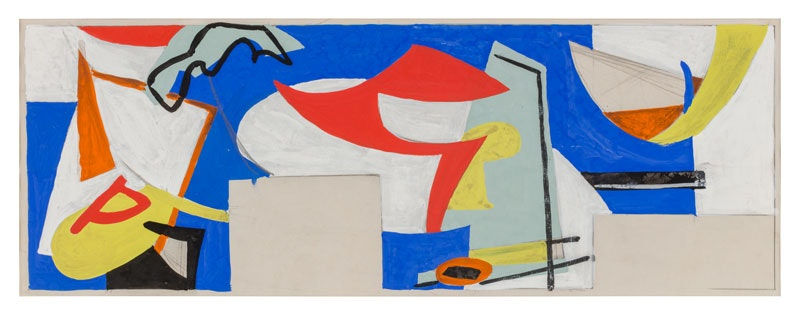
Lee Krasner is often associated with Jackson Pollock, but her own work stands firmly within Abstract Expressionism.
Her paintings are powerful, layered, and energetic, without the mythology that often surrounds her male contemporaries.
Her work proves she is far more than “the partner of.” Lucky you, you get to go to the Moma to see it.
8. Tarsila do Amaral: Modernism Beyond Europe

Tarsila do Amaral shows once again that modernism is not exclusively a European story.
In Brazil, she developed a colorful and vibrant form of modernism, strongly connected to landscape and culture.
9. Maria Sibylla Merian: Art and Science Combined

Merian was both an artist and a scientist. And an absolute adventurer: in the 17th century she traveled to Suriname to study insects and documented their life cycles with unprecedented precision.
Her work shows that art and science used to be far less separated than they are today.
You can view her work at the Rijksmuseum collection
10. Loïs Mailou Jones: Modernism Without Borders
Loïs Mailou Jones combined modernism with African influences, textiles, and international

travel. She does not fit neatly into a single movement, which may explain why she is less widely known than her male contemporaries.
Her work is proof that art becomes most interesting when different cultures intersect.
You can check it out at the Smithsonian.
So what connects these artists?
What unites these ten artists is not only that they are women. Above all it's that they were not given the place in art history they clearly deserved, especially because they did not fit neatly into one style, one movement or one narrative. And perhaps that is exactly what makes them so compelling. Because the more you look, the clearer it becomes: art history is not only what we remember, but also what quietly surrounds it, often left unnamed.
Now I’m curious: next time someone pops you the question, who would you add to your list of important artists?


Comments